
The marketing funnel is a framework that maps the journey a customer takes from first hearing about your brand to becoming a loyal advocate. It helps marketing and sales teams identify where prospects drop off — and what to do about it.
For over a century, the marketing funnel has been the backbone of marketing strategy. But the way modern teams activate it has changed dramatically. Today, AI-driven automation, real-time behavioral data, and multi-channel engagement tools mean the funnel is no longer a passive map — it's an active, automated system.
In this guide, we'll walk through the history and evolution of the marketing funnel, break down each stage with actionable strategies, and show how platforms like Ortto help teams move prospects through the funnel more efficiently.
Key stat: Companies that excel at lead nurturing generate 50% more sales-ready leads at 33% lower cost. (Forrester Research)
The history of the marketing funnel
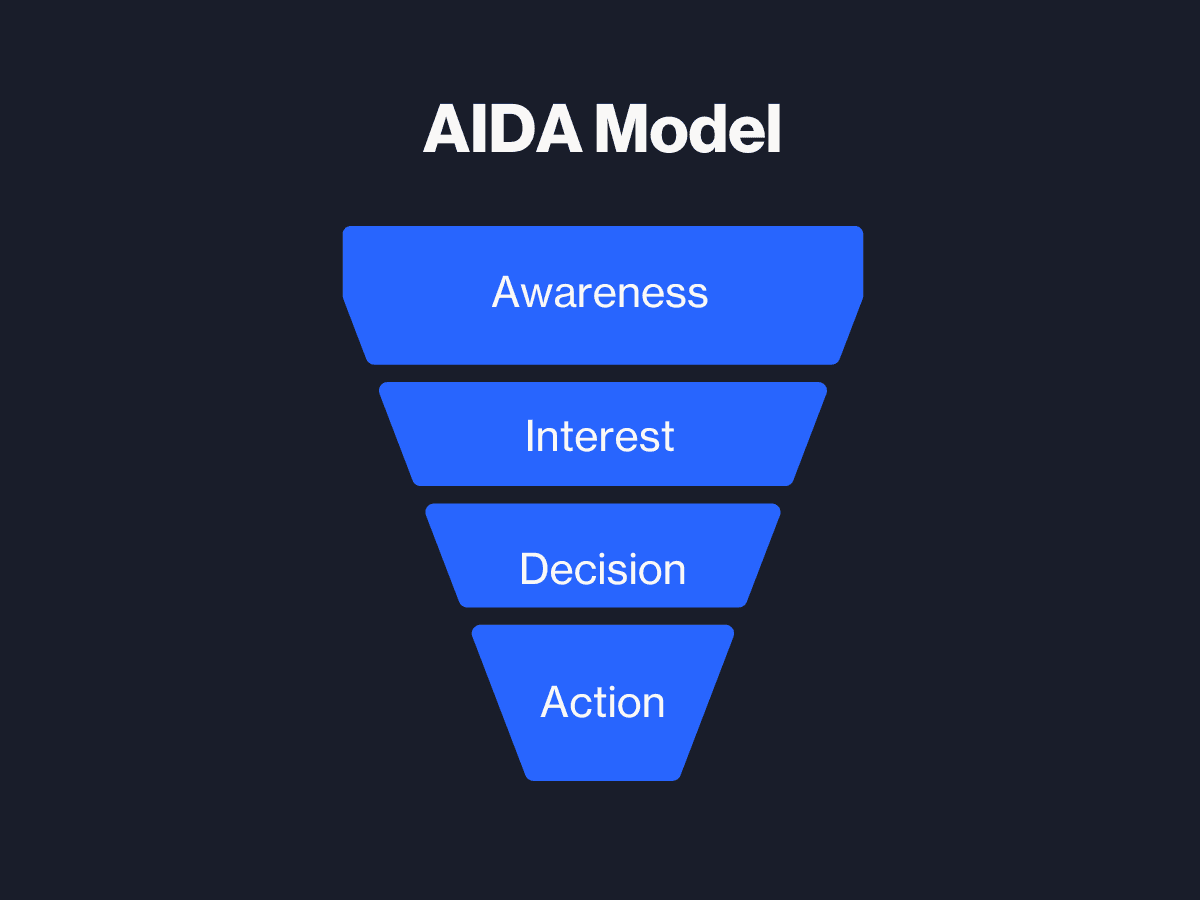
At the turn of the 20th century, advertising pioneer Elias St. Elmo Lewis developed the AIDA model — a framework that mapped the stages of a customer's relationship with a business:
Awareness: The prospect becomes aware of their problem and potential solutions.
Interest: The prospect expresses interest in a product category that solves their problem.
Desire: The prospect evaluates specific brands or products against their needs.
Action: The prospect decides to purchase — or continues evaluating.
In 1924, William H. Townsend combined the AIDA model with the funnel metaphor and the first marketing funnel was born. The funnel shape itself was deliberate: a large pool of prospects enters at the top, and a smaller group converts at the bottom.
The evolution of the marketing funnel
The original AIDA funnel has been iterated on significantly. Here are the most important versions used today:
ToFu, MoFu and BoFu
These acronyms describe funnel position and are widely used across marketing and sales teams:
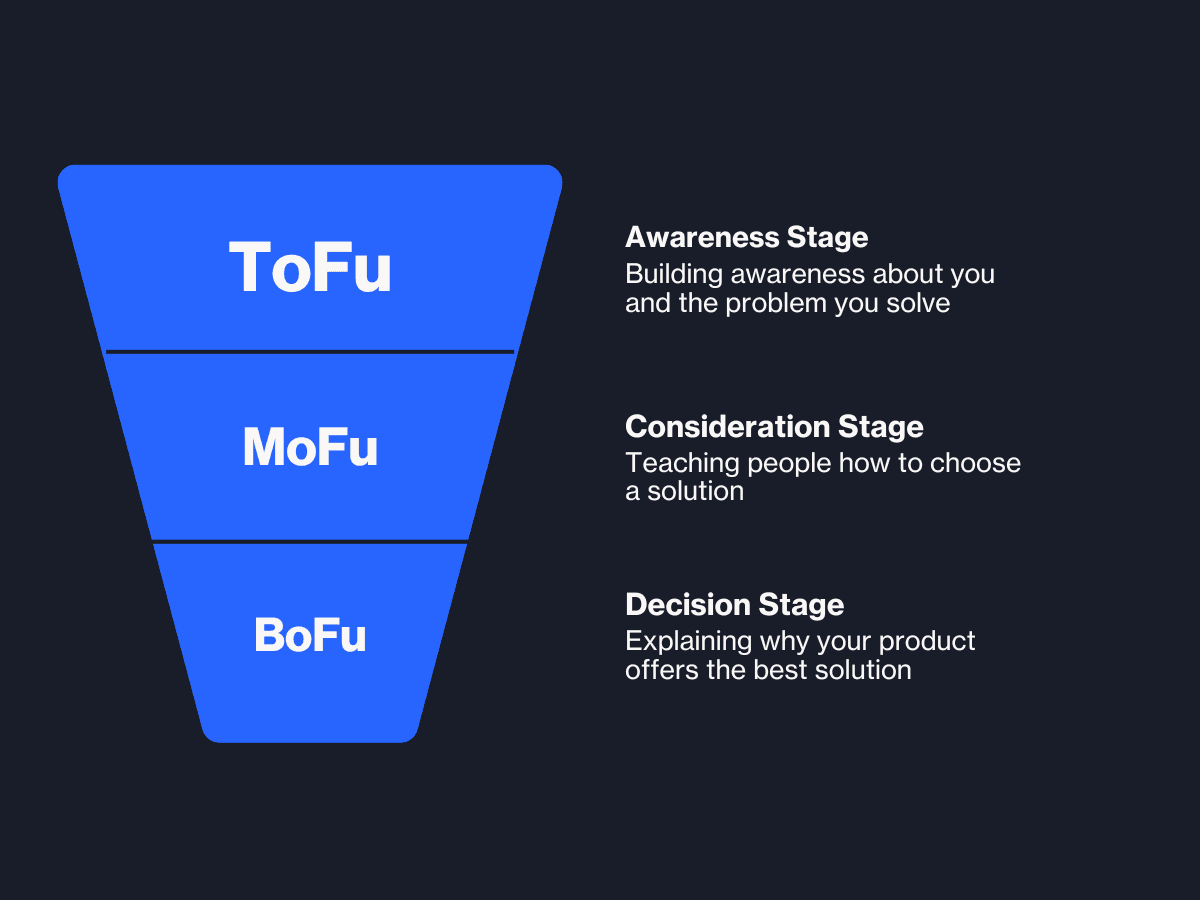
TOFU (Top of Funnel) — Awareness Stage: Prospects are learning about their problem and discovering your brand.
MOFU (Middle of Funnel) — Consideration Stage: Prospects are evaluating solutions and comparing options.
BOFU (Bottom of Funnel) — Decision Stage: Prospects are ready to choose a solution. Your job is to close.
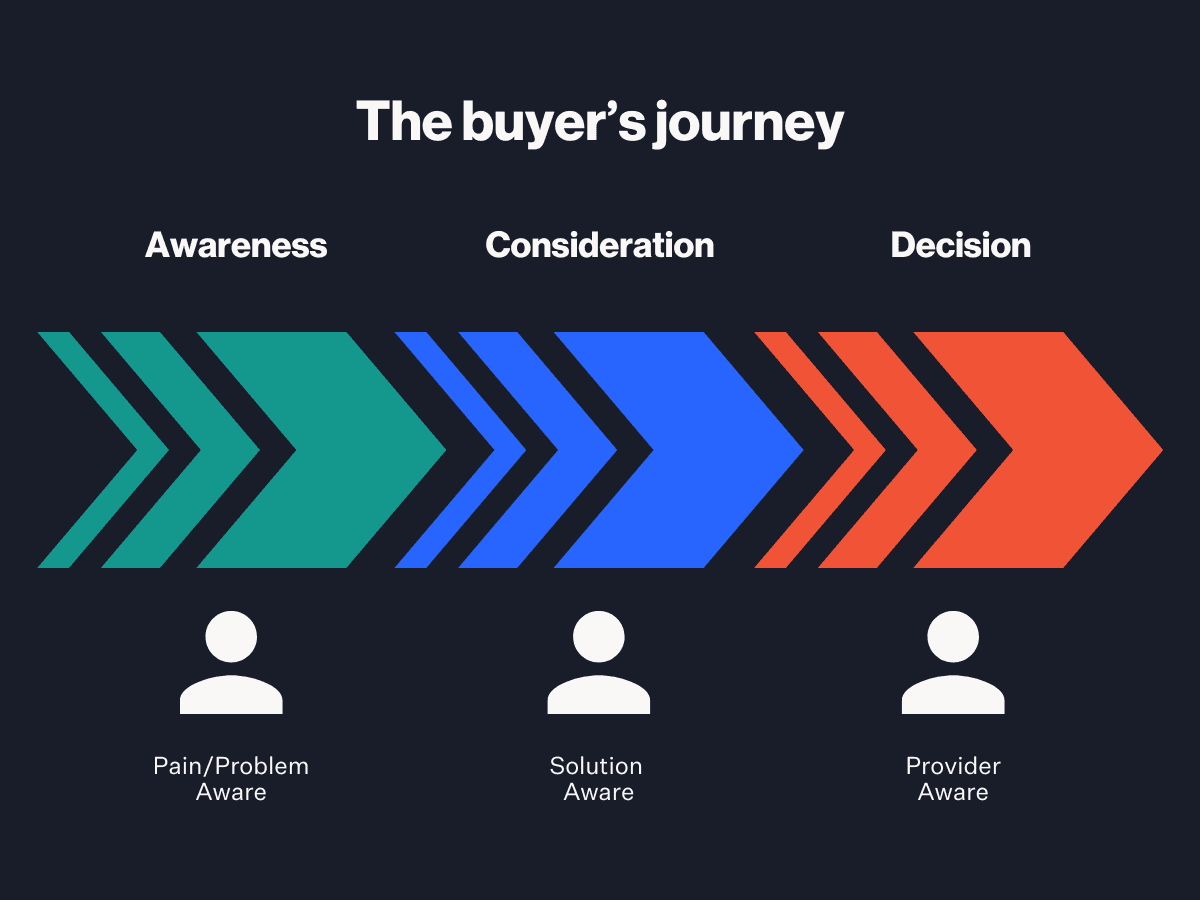
The buyer’s journey
HubSpot popularised a simplified three-stage version — Awareness, Consideration, Decision — that aligns closely with how B2B buyers self-educate before engaging with sales. This model is particularly useful for content planning across the funnel.
The customer experience funnel
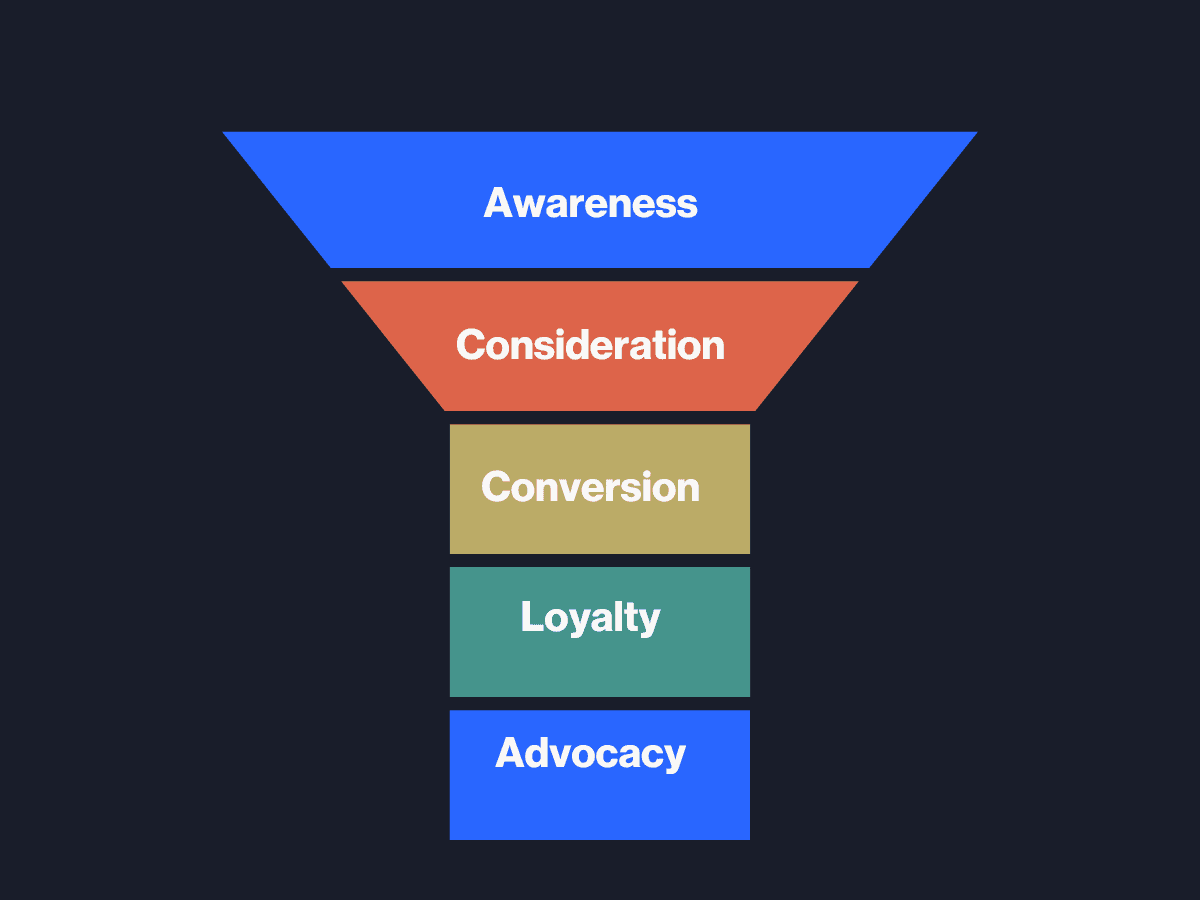
This version adds two critical stages beyond conversion: Loyalty and Advocacy. These additions reflect the reality that retaining an existing customer costs significantly less than acquiring a new one — and that advocates generate high-quality, pre-nurtured leads at the top of the funnel. According to Bain & Company, increasing customer retention by just 5% can increase profits by 25–95%.
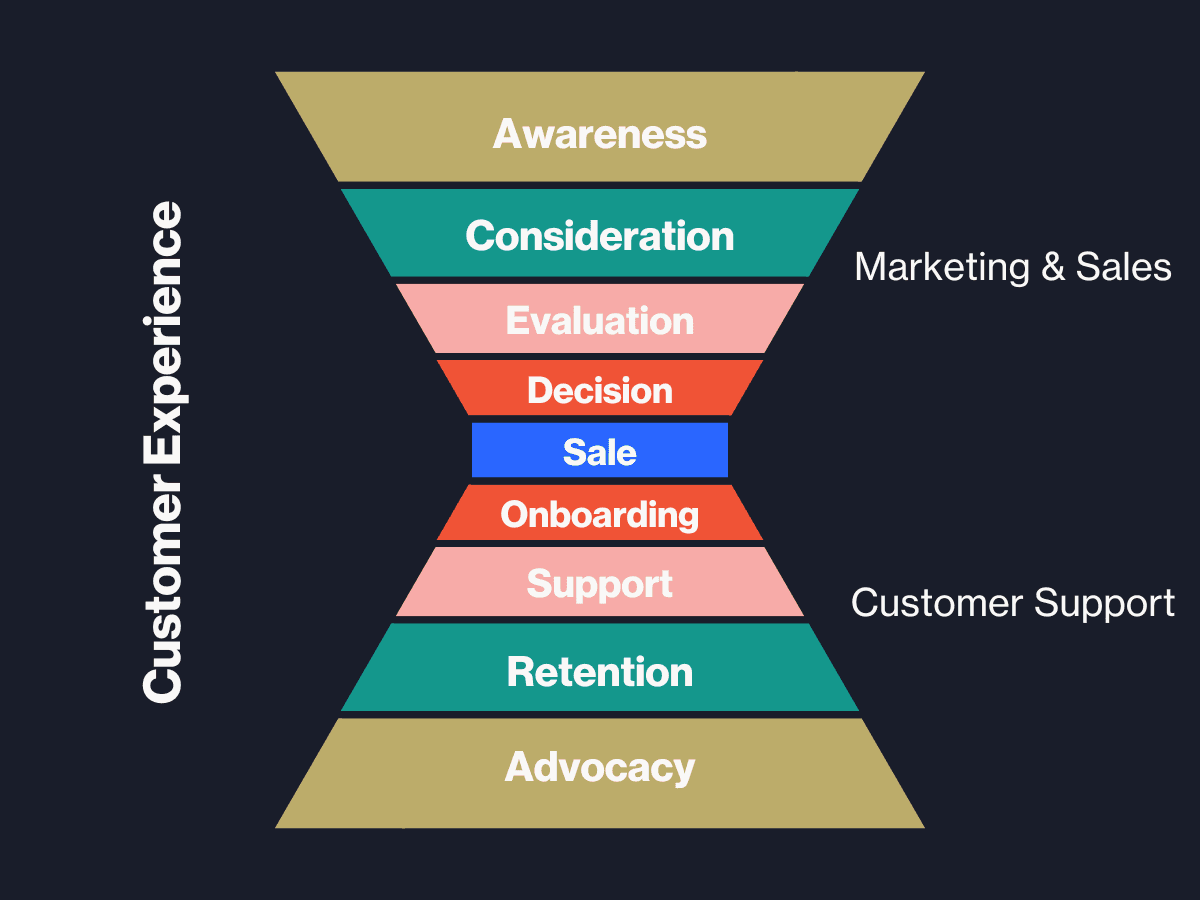
The hourglass
The hourglass combines the traditional sales funnel with an inverted 'post-purchase' funnel. Where the sales funnel ends at conversion, the hourglass continues — turning customers into loyal advocates who feed new prospects back into the top of the funnel. This creates a self-reinforcing growth loop.
Ortto's journey builder is purpose-built for the hourglass model — letting teams automate the full customer lifecycle from first touch to advocacy, using a single connected platform.
Optimizing each stage for business growth
Each stage of the marketing funnel depends on the success of the stage before it. A leaky funnel at the consideration stage cannot be fixed by doubling awareness spend. Build your strategy stage by stage, with clear goals, content, and KPIs at each.
The awareness stage
What it is: The prospect first becomes aware they have a problem and begins looking for a solution.
Prospect's goal: Name their problem and identify possible solution categories.
Your goal: Position your brand as a credible, educational resource. Generate website traffic and build your email list.
Best content: Blog posts, SEO guides, social media, webinars, email newsletters.
Key metrics: Website traffic, social reach, email subscribers, inbound links.
How Ortto helps: Ortto's CDP captures every visitor interaction from the first touchpoint, so you can build rich audience segments from day one. Use Ortto's email marketing and in-app messaging tools to convert anonymous visitors into identified leads.
The consideration stage
What it is: Prospects evaluate which solution category — and which specific vendor — best fits their needs. This is the longest stage in the funnel and can span weeks or months.
Prospect's goal: Narrow down to a shortlist and begin comparing specific solutions.
Your goal: Nurture leads with targeted content that proves your authority and product fit. Align marketing and sales messaging to reduce churn risk.
Best content: Case studies, comparison guides, ebooks, webinars, 1:1 demos.
Key metrics: Email open rates, landing page conversion rates, lead quality, booked demos.
How Ortto helps: Ortto's journey builder lets you automate MOFU nurture sequences triggered by real behavioral signals — like a prospect visiting your pricing page or downloading a case study. Leads are automatically scored and routed to sales at the right moment, reducing manual handoff friction.
Key stat: Nurtured leads make 47% larger purchases than non-nurtured leads. (The Annuitas Group)
The purchase stage
What it is: The prospect chooses a specific product or service. In modern funnel models, this is the beginning of the customer relationship, not the end.
Lead's goal: Confirm that your solution fits their budget, problem, and requirements.
Your goal: Remove friction from the purchase decision. Provide clear social proof, transparent pricing, and responsive support.
Best content: Testimonials, detailed case studies, product comparison pages, free trials, demos, consultations.
Key metrics: Lead-to-sale conversion rate, revenue, customer acquisition cost.
How Ortto helps: Ortto's analytics dashboards give sales teams full visibility into a lead's journey — every page visited, email opened, and form submitted — so they can personalise the final conversation and close with confidence.
→See how Ortto supports your sales process — Book a demo
The loyalty stage
What it is: Loyalty starts the moment a customer converts. The onboarding experience, ongoing communication, and product education all determine whether a customer stays or churns.
Customer's goal: Realise ongoing value from their purchase and build confidence in the product.
Your goal: Deliver fast time-to-value, reduce support burden, and increase customer lifetime value.
Best content: Onboarding sequences, tutorials, knowledge base articles, milestone celebrations, product update communications.
Key metrics: Churn rate, customer lifetime value, active usage, recurring revenue.
How Ortto helps: Ortto's journey builder automates the full post-purchase lifecycle — from onboarding welcome sequences to milestone check-ins and re-engagement campaigns — all triggered by real product usage data from your CDP.
The advocacy stage
What it is: Customers who have had an exceptional end-to-end experience will refer your product to peers, generating high-quality inbound leads at zero acquisition cost.
Customer's goal: Help peers solve problems similar to their own.
Your goal: Identify your happiest customers and give them easy, incentivised ways to advocate.
Best content: Referral programs, review site campaigns, NPS surveys, loyalty discounts, co-marketing opportunities.
Key metrics: Net Promoter Score, referrals generated, reviews, social mentions.
How Ortto helps: Use Ortto's segmentation to identify your highest-NPS customers and trigger automated referral or review campaigns at the right moment — when satisfaction is highest.
Frequently asked questions
What is a marketing funnel?
A marketing funnel is a framework that represents the stages a prospect moves through before becoming a customer — from first awareness of a problem to taking action and purchasing a solution. It helps marketing and sales teams understand where to focus effort and how to improve conversion rates at each stage.
What are the stages of a marketing funnel?
The most common marketing funnel stages are Awareness, Consideration, Purchase, Loyalty, and Advocacy. Earlier models used Awareness, Interest, Desire, and Action (AIDA). Modern funnel models extend beyond conversion to include post-purchase stages that drive retention and word-of-mouth growth.
What is ToFu, MoFu, and BoFu?
ToFu (Top of Funnel), MoFu (Middle of Funnel), and BoFu (Bottom of Funnel) are shorthand terms for different funnel positions. ToFu covers brand awareness, MoFu covers lead nurturing and consideration, and BoFu covers purchase decisions and conversion.
What is the hourglass marketing funnel?
The hourglass funnel extends the traditional funnel beyond conversion by adding Loyalty and Advocacy stages. Rather than ending at purchase, the hourglass model recognises that happy customers become advocates who drive new leads into the top of the funnel — creating a self-sustaining growth loop.
How does marketing automation help at each funnel stage?
Marketing automation platforms like Ortto allow teams to deliver the right message to the right person at the right time — automatically. At the awareness stage, automation captures and qualifies leads. At consideration, it nurtures them with personalised content. At purchase, it supports sales with full behavioural context. Post-purchase, it drives onboarding, retention, and advocacy at scale.
What metrics should I track at each funnel stage?
Awareness: website traffic, email subscribers, social reach. Consideration: email open rates, booked demos, lead quality. Purchase: conversion rate, customer acquisition cost, revenue. Loyalty: churn rate, customer lifetime value, active usage. Advocacy: Net Promoter Score, referrals, reviews.
Final word
The marketing funnel has been central to marketing strategy for over a hundred years — because it works. Its power lies in its simplicity: a clear framework for understanding where customers are in their journey and what they need next.
What has changed is the tooling. Modern platforms like Ortto let teams activate every stage of the funnel with precision — using real customer data, automated journeys, and multi-channel messaging to move prospects from awareness to advocacy at scale.
Ready to build a smarter, automated funnel?